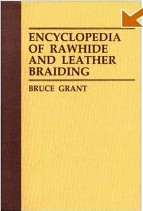
En otra oportunidad ya me he referido a la existencia del trenzado con cuero en Australia. Pero esta vez para mi sorpresa, me he topado en la Internet con una vasta bibliografía que aglutina parte del conocimiento sobre el arte soguero en el mencionado país. Por tal razón, y a semejanza con los EE.UU, deduzco que ella forma parte de la cultura australiana desde hace buen tiempo.
El siguiente listado bibliográfico forma parte del sítio Web australiano
The Rams Skull Press (unas 40 obras apróximadamente!) Quien acceda a él se dará cuenta que la lista es verdaderamente diversa en relación a la enseñanza de técnicas de trenzado del cuero (Leather Braiding). Asimismo, también me causó gran interés, la presentación de material relacioanado com: confección de monturas (saddle), riendas, fustas (whips), cinturones (belts), descripción de herramientas para trabajar el cuero ( Leather Tools), su curtido, además de las trenzas (Braids), por supuesto. Como dato a ser resaltado, las obras fueron escritas e ilustradas por Ron Edwards y Anne Edwards.
A continuación exhibiré algunos títulos, seguido de la reseña de cada libro (en inglés) que fuera llevada a cabo por la señalada librería.

"Now almost a standard reference book, this is known to bushies Australia-wide and is found on even the most remote station properties. Its popularity may be gauged from the fact that it has been in print for over 20 years and has gone into over a dozen editions. It gives simple instructions for all the basic bush crafts from fencing, building, leatherwork, knots, fishnets, whips and much more. 145 pages, 400 drawings".
 "Seven small leatherwork books together in the one volume. These books are Beginning Leatherwork, The Secret Plait, Leather Lacing Manual, Stockmen's Plaited Belts, Braided Belts, Plaits Round & Flat, Bushmen's Belt Pouches. All the basic information needed to begin leatherwork plus a number of projects. 160 pages, 1,100 drawings".
"This book is the same size and price as the rest of the series and is devoted to the making of whips. The first section gives instructions for a basic 8 strand whip, the second deals with the making of kangaroo hide whips. Other chapters explain the making of bullwhips, snake whips and whips made from pre-cut lace. Also instructions on how to plait names in whips and plaiting designs for whip handles. It contains the full contents of four smaller books, fully revised and enlarged, plus much additional material. 160 pages, 740 drawings".
 "Advanced Leatherwork Vol 1– Interesting Braids and Flat PlaitsFor those who have already mastered common plaits and braids, a must for the serious braider and plaiter. Follows on from Bush Leatherwork and More Bush Leatherwork. 272 pages".
 "Advanced Leatherwork Vol 2– Round Knots and BraidsThis second volume deals with the round knots, those knots which are designed to wrap around any object that needs covering".
 "The most popular bushie belt is made of plaited kangaroo lace. Detailed instructions on making plaited belts from 8 to 16 strands. Illustrated methods of creating various patterns and forming of a crocodile ridge down the belt centre. 28 pages, 90 drawings".
 "Plus How To Make A Snakewhip. Transforming plain leather belts into valuable attractive items by adding braiding. Techniques are simple and easy to learn, including how to make a flexible snakewhip. 20 pages, 138 drawings".
 "Homemade Leatherworking ToolsMost basic tools can be readily made by practical people using these fully illustrated techniques. Make only one tool and the book pays for itself. 20 pages, 87 drawings".
 "Whipmaking Book OnePlain instructions on how to make a 4 and 6 plait redhide or greenhide whip, the common stockwhip of the bush. Each step is clearly illustrated, how to form the belly, plait the whip, attach the fall and cracker and make the handle. Diagrams for 6,8, and 12 plaits are also illustrated. 24 pages, 80 drawings".
 "Whip Handle DesignsNot intended for beginners but for those who can make a plain whip and now want to work some patterns into the handle. Most of the designs are for 12 to 16 strands but will adapt to a greater number of strands once some skill has been gained. 32 pages, 45 drawings".
 "Little SnakeThe title comes from a neat belt plait that is a relative of another plait known as the Brown Snake. A new heel knot is also explained and also a couple of attractive Box Patterns for the worker who likes a challenge. 36 pages, 250 illustrations".
 "Old Style Leather ProjectsInstructions on several articles from old leather catalogues with designs combining the charm of bygone days with today’s look. Includes pocket notebook and card case, saddle bags and purses. 32 pages, 109 drawings".
"More Bush LeatherworkNINE of the above leatherwork books available in 1 volume:
Money belts, Turk's heads, saddle tree and bridles, Beginning Leatherwork, Leather Projects 1, Leather Projects 2, Leather Projects 3, Money Belts, Turk's-heads, Making a Saddle Tree, Bridles Plaited & Plain, A Cheap & Simple Saddle (Mongolian saddle). Numerous plaiting projects for beginners and experts. 288 pages, hard cover".
 "Making A Stock SaddleStep-by-step instructions on building a traditional Australian stock saddle - the best working saddle in the world. All the tools and techniques are illustrated, and a number of people have already made saddles from these instructions. 120 pages, 260 drawings".
 "Tanning Hides and SkinsA series of articles from early farming magazines first published around the 1930 – 1940 period when farmers still tanned their own skins and made much of their own gear. Although some of the ingredients are now hard to get, in general the information is very sound, and this still remains one of the best books on the subject".